What to Do if You Find a Baby Bird
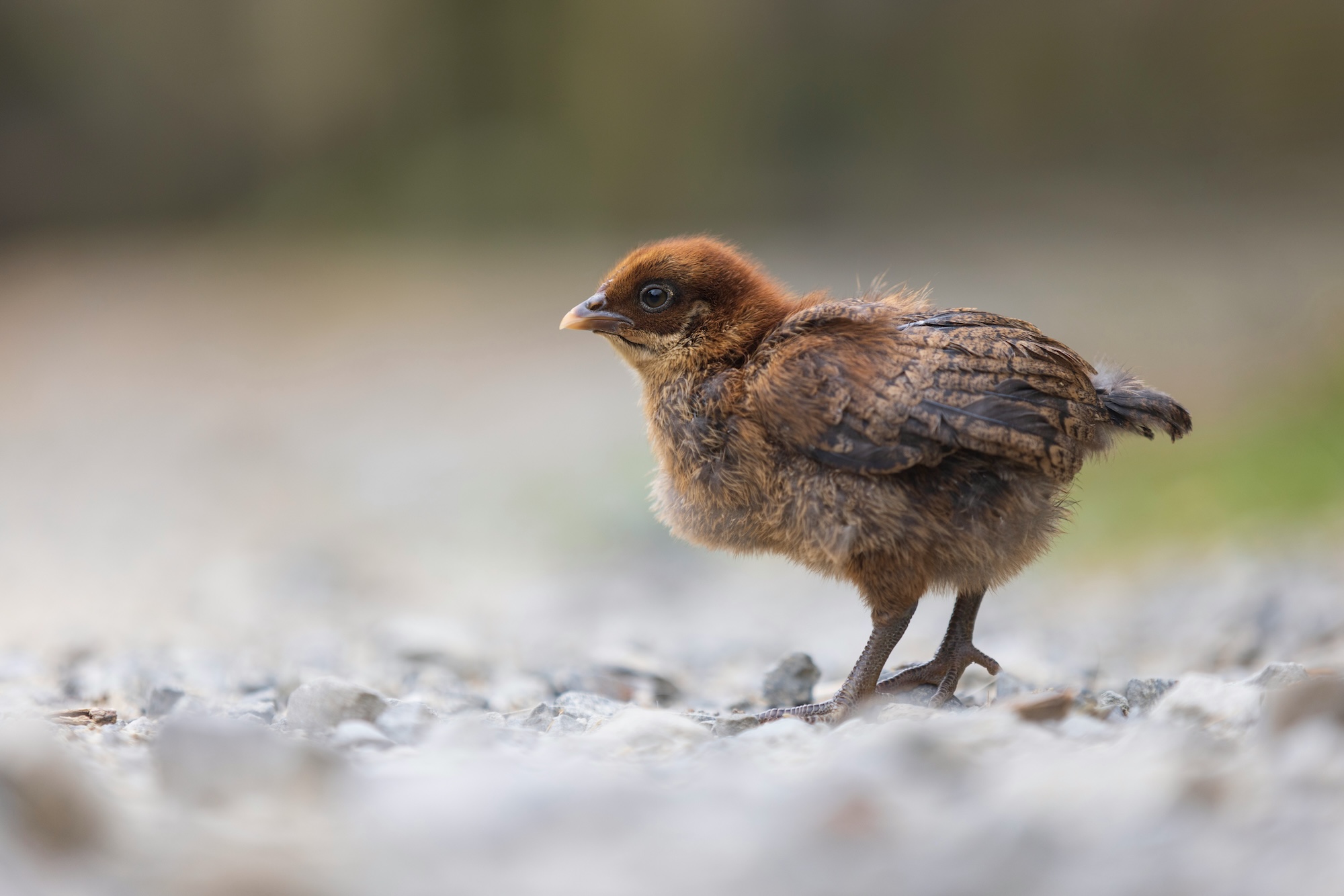
Finding a baby bird on the ground can be worrying, especially when no parent is visible. However, many young birds leave the nest before they can fly well and continue to receive care from their parents nearby.
Before moving the bird, look for signs of injury and determine whether you have found a nestling or a fledgling. The difference will help you decide what to do next.
Call the Guelph Humane Society (GHS) at 519-824-3091 if the bird:
Contact GHS after any contact with a cat, even when the bird has no visible injuries. Small puncture wounds can be difficult to see and may lead to a serious infection.
Please do not feed, give water to, handle or transport the bird unless our team directs you to do so.
A nestling is a very young bird who is not ready to be outside the nest.
A nestling will usually:
A healthy nestling found on the ground usually needs help returning to their family.
A fledgling is an older baby bird who has naturally left the nest and is learning to fly.
A fledgling will usually:
A healthy fledgling on the ground usually does not need to be rescued. Their parents are likely nearby, continuing to feed and protect them.
First, look in nearby trees, shrubs, planters and building ledges for the original nest. Parent birds may remain out of sight while you are close.
If the nestling appears healthy and the original nest is easy to reach safely, gently return the bird to the nest. It is a myth that parent birds will reject a baby who has been touched by a person.
Once the bird is back in the nest:
Staying too close may prevent the parents from approaching.
If the nest is damaged, missing or too difficult to reach safely, call GHS before creating a replacement nest or moving the bird elsewhere. Our team can help determine the safest next step.
If the fledgling is alert, able to hop and does not appear injured, leave them where they are. Learning to fly takes time, and spending time on the ground is a normal stage of development for many young birds.
To give the fledgling the best chance of remaining with their family:
Parent birds may be caring for several fledglings scattered throughout an area. They may only approach once people and pets have moved away.
If the fledgling is in an immediately dangerous location, such as a road, driveway or open area with no cover, they may be moved a few metres to a nearby shrub or other sheltered location. Keep the bird in the same immediate area and on the same side of the road so their parents can find them.
Do not return a healthy fledgling to the nest. They have already reached the stage when leaving the nest is expected and will likely hop out again.
Not seeing an adult bird does not necessarily mean the baby has been abandoned. Parent birds may be collecting food, caring for other young or waiting for people to leave.
Watch from inside or from a considerable distance for up to two hours. If the bird is a healthy fledgling, look for an adult approaching to feed them. If a nestling has been returned to the nest, watch for a parent visiting the nest.
Call GHS if:
Do not panic. A healthy baby bird may still be reunited with their parents.
Call GHS for guidance. Depending on the bird’s age and condition, our team may advise you to return a fledgling to the area where they were found, place a nestling back in the nest or temporarily contain the bird.
Do not move the bird to another park, neighbourhood or natural area. Their parents will not be able to find them there.
Only contain the bird if GHS or an authorized wildlife rehabilitator advises you to do so.
Follow the instructions provided by the team. Temporary containment will usually involve:
Do not give the bird food or water. Baby birds require species-specific diets, and attempting to feed or give water can cause choking, aspiration, illness or death.
Do not attempt to raise a wild bird yourself. Wildlife rehabilitation requires appropriate authorization, facilities and specialized care.
Ducklings and goslings normally remain with their family and require different assistance from young songbirds.
Learn What to Do if You Find a Duckling or Gosling
Young birds of prey can cause serious injuries with their feet and talons. Do not approach or attempt to handle one. Keep people and pets away and call GHS.
Young pigeons and doves can look very different from other baby birds and may be mistaken for injured adults or young birds of prey. Call GHS if you are uncertain about the species or whether the bird needs help.
Avoid disturbing an active nest or moving it to a different location. Parent birds may stop caring for a nest that has been moved.
If yard work, construction or property maintenance could disturb an active nest, pause work in the immediate area and give the family space. Under federal regulations, nests containing migratory birds or viable eggs are protected from being damaged, destroyed, disturbed or removed.
Learn About Protecting Migratory Birds and Their Nests
Call 519-824-3091 if:
GHS Animal Services responds to wildlife emergencies 24 hours a day, seven days a week in the:
If you live outside the GHS service area, contact your local humane society, municipal animal services provider or an authorized wildlife rehabilitator.
Find an Authorized Wildlife Rehabilitator in Ontario
When you find a baby bird, it is not always easy to know whether they need assistance or are simply taking their first steps toward independence.
If you are uncertain, keep your distance, keep pets away and call GHS at 519-824-3091. Our team can help you determine what to do next.
What to Do if You Find a Young Wild Animal
Explore All Wildlife Resources
Sources: Government of Ontario; Environment and Climate Change Canada; Toronto Wildlife Centre; City of Guelph